
Archaeology and the Bible: Twenty Discoveries That Illuminate Biblical History
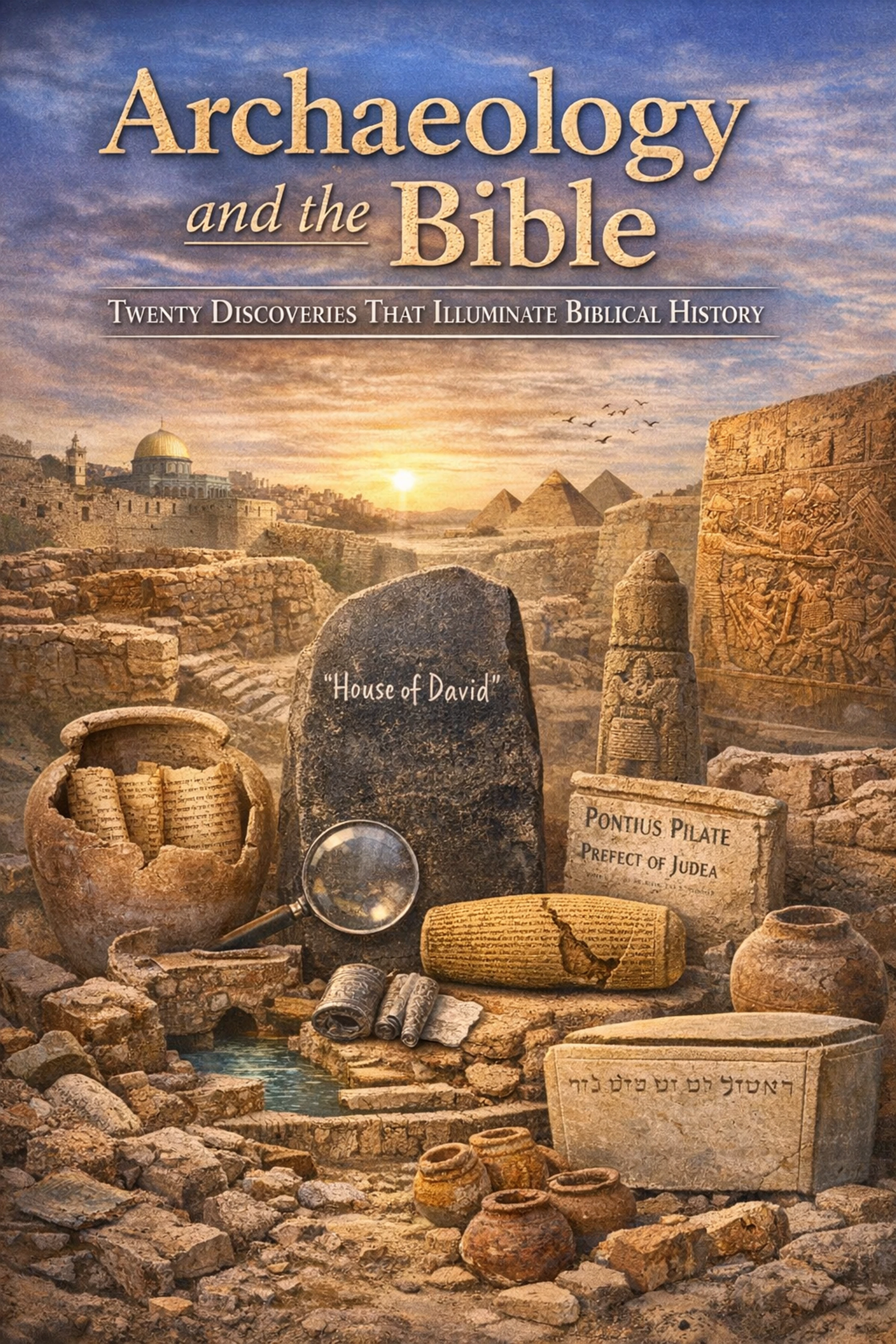
For centuries, critics have claimed that the Bible is merely a collection of religious myths with little historical grounding. Archaeology, however, has increasingly demonstrated that the Bible consistently reflects real people, places, events, and cultural practices of the ancient Near East. While archaeology cannot prove theological truths or miraculous claims, it can test historical reliability—and in many cases, it has confirmed details once doubted.
Below are twenty of the most significant archaeological discoveries frequently cited by scholars as corroborating historical aspects of the Bible. Together, they show that Scripture stands firmly within the real world of ancient history.
1. Dead Sea Scrolls (1947)
Discovered in caves near Qumran, the Dead Sea Scrolls contain manuscripts of nearly every book of the Old Testament, dating from the 3rd century BCE to the 1st century CE. When compared with later medieval Hebrew manuscripts, the text shows remarkable consistency, confirming the careful transmission of Scripture over more than a millennium.
🔗 https://www.imj.org.il/en/wings/shrine-book/dead-sea-scrolls
2. Tel Dan Inscription (1993)
This 9th-century BCE Aramaic stele bears the phrase “House of David,” the earliest extrabiblical reference to King David. It confirms that David was not a later legend but the founder of a recognized royal dynasty.
🔗 https://grokipedia.com/page/Tel_Dan_stele#tel-dan-stele
3. Mesha Stele (Moabite Stone) (1868)
Erected by King Mesha of Moab, this inscription parallels events in 2 Kings 3 and references Israelite domination and rebellion. It provides an independent account of Israel’s interactions with neighboring nations.
🔗 https://grokipedia.com/page/Mesha_Stele#mesha-stele
4. Hezekiah’s Tunnel and the Siloam Inscription
The tunnel beneath Jerusalem and its inscription describe how two teams carved through rock to secure water during an Assyrian siege. This matches the biblical record of King Hezekiah’s preparations (2 Kings 20:20; 2 Chronicles 32).
🔗 https://www.bibleodyssey.org/articles/the-siloam-inscription-and-hezekiahs-tunnel/
5. Cyrus Cylinder (1879)
This Persian artifact records Cyrus the Great’s policy of allowing exiled peoples to return home and rebuild their temples. It aligns closely with Ezra 1 and the biblical account of the Jewish return from the Babylonian exile.
🔗 https://www.britishmuseum.org/collection/object/W_1880-0617-1941
6. Pontius Pilate Inscription (1961)
Found at Caesarea Maritima, this limestone inscription names “Pontius Pilate, Prefect of Judea,” confirming the historical existence and title of the Roman governor who presided over Jesus’ trial.
🔗 https://www.biblelandsmuseum.org/pilate-inscription.html
7. Pool of Siloam (2004 Excavation)
Archaeologists uncovered the ancient pool described in John 9, where Jesus healed a man born blind. The site matches first-century descriptions and Second Temple period construction.
🔗https://www.biblicalarchaeology.org/daily/biblical-sites-places/biblical-archaeology-sites/the-siloam-pool-where-jesus-healed-the-blind-man/
8. Bullae (Seals) of Biblical Figures
Clay seal impressions bearing names of figures such as King Hezekiah and Baruch son of Neriah (Jeremiah’s scribe) authenticate individuals mentioned in Scripture and show how official documents were sealed.
🔗https://www.bible.ca/bulla/
9. Sennacherib’s Prism (1830)
This Assyrian record recounts King Sennacherib’s campaign against Judah and the siege of Jerusalem under Hezekiah, closely paralleling 2 Kings 18–19—though notably omitting Jerusalem’s capture.
🔗 https://www.britishmuseum.org/collection/object/W_1929-1012-1
10. Shishak’s Invasion Relief (Karnak)
An Egyptian relief by Pharaoh Shoshenq I (biblical Shishak) lists cities conquered in Israel and Judah, corroborating his invasion described in 1 Kings 14 and 2 Chronicles 12.
🔗 https://bibleshishak.weebly.com/relief-of-shishak.html
11. Taylor Prism (Sennacherib’s Annals)
Another Assyrian account detailing the conquest of Lachish and the siege of Jerusalem. Reliefs from Nineveh visually depict the battle scenes described in the Bible.
🔗 https://www.worldhistory.org/image/2469/the-taylor-prism-of-king-sennacherib-nineveh/
12. Hazor Destruction Layer
Excavations at Hazor reveal a massive burn layer from the Late Bronze Age. The city’s violent destruction corresponds with Joshua 11, where Hazor is singled out as a major Canaanite stronghold.
🔗 https://www.biblicalarchaeology.org/daily/biblical-sites-places/biblical-sites/hazor/
13. Jericho’s Walls and Destruction
Archaeology shows collapsed walls and a burn layer consistent with a sudden destruction. While dating is debated among scholars, several features align with the biblical account in Joshua 6.
🔗 https://www.biblicalarchaeology.org/daily/biblical-sites-places/jericho/
14. Lachish Letters (Ostraca) (1935)
These pottery inscriptions from the Babylonian siege period mention signal fires and military distress, echoing themes found in Jeremiah 34.
🔗 https://tabletalkmagazine.com/article/2023/09/lachish-letters/
15. Ketef Hinnom Silver Scrolls (1979)
Tiny silver amulets containing the priestly blessing from Numbers 6 are the oldest known biblical text fragments, dating to the 7th century BCE.
🔗 https://historyofinformation.com/detail.php?id=2340
16. Black Obelisk of Shalmaneser III (1846)
This monument depicts Israelite King Jehu (or his envoy) paying tribute to Assyria—the earliest known image of an Israelite ruler.
🔗 https://www.britishmuseum.org/collection/object/W_1848-1104-1
17. Merneptah Stele (1896)
An Egyptian inscription mentioning “Israel” as a people group in Canaan provides the earliest extra-biblical reference to Israel.
🔗 https://www.ancient-origins.net/artifacts-ancient-writings/merneptah-stele-0020466
18. Babylonian Chronicles and Ration Tablets
These records mention Jehoiachin, king of Judah, receiving rations while in Babylonian exile, confirming details in 2 Kings 25.
🔗 https://www.britannica.com/topic/Jehoiachin
19. Caiaphas Ossuary (1990)
A first-century burial box inscribed “Joseph son of Caiaphas,” likely belonging to the high priest who presided over Jesus’ trial.
🔗https://www.greatarchaeology.com/Caiaphas_ossuary.php
20. Mount Ebal Curse Tablet (2019; published 2022)
A lead tablet discovered at Mount Ebal contains proto-Hebrew curse language consistent with Deuteronomy 27 and Joshua 8, possibly representing one of the earliest Hebrew inscriptions.
🔗 https://armstronginstitute.org/825-mount-ebal-tablet-confirms-bible
Conclusion
Archaeology does not prove faith, nor does it validate miracles—but it consistently demonstrates that the Bible accurately reflects real history. Time and again, discoveries have affirmed people, places, and events once dismissed as fictional. Far from being undermined by archaeology, Scripture has been increasingly illuminated by it.
As excavations continue, the biblical world grows clearer—not as myth, but as history grounded in real soil, real cities, and real lives.